
UK Casino Regulation: Future Changes Entrepreneurs Must Know
Some organisations concerned about the normalisation of gambling for children wanted to see the minimum age for all commercial gambling, including Category D machines, raised to 18. The activities with the highest participation over that period were arcade gaming machines such as penny pusher or claw grab machines (22%), placing a bet for money between friends or family (15%) and playing cards with friends or family for money (5%). Low stake Category D gaming machines have no minimum age for play, although members of the main trade association voluntarily restrict play to adults only on slot style or ‘fruit’ machines which pay out cash (see Annex C for a full breakdown of machine categories).
As much of the risk relates to online gambling, we propose that people aged 18 to 24 should have lower trigger points for the enhanced spending checks outlined in Section 1.2, and our consultation on online slot stakes will include options for extra protections for this group (Section 1.3). However, the evidence shows that people aged 18 to 24 years old are generally more vulnerable to gambling-related harms than the wider population. These usually entail a more sensitive calibration of player monitoring systems to detect harm, but some operators take more direct action, for example requiring customers aged 18 to 24 to set their own deposit limit before they are permitted to gamble or unilaterally implementing a mandatory maximum loss limit.

Deposit limits, session limits and other player-centric controls help to empower customers. In the Gambling Act Review call for evidence, the Cashless Group submitted a proposal that transactions could take a minimum time of 30 seconds to roughly mimic the time taken from card insertion up until receiving funds at an ATM. Breaks in play are designed to stop dissociation/disconnection from the world around them, with research suggesting that best practice is to combine breaks in play with responsible gambling messaging.
Impacts on gambling-related harm
There is significant detail underneath this population problem gambling rate which the PHE review considered. There are some recent signs of a decrease in problem gambling rates, with the Gambling Commission’s quarterly surveys finding a steady fall over recent years to a low of 0.2% in the year to December 2022. Based on Health Survey data, we now estimate there to be approximately 300,000 people across Great Britain who meet the definition of being a ‘problem gambler’. Firstly, the best available evidence suggests that the large majority of people who gamble suffer no ill effects. Gambling harm is often a result of the interplay between individual susceptibility, environmental factors, the products themselves and operator actions.
- Sixty-seven per cent of respondents to this chapter of the consultation stated that ‘cash-out’ Category D slot-style machines should be required to move to an age-restricted area.
- With new technologies and payment regulations now in place, the Commission will work with others to consider what more can be done to reduce this risk.
- Now, all firms that wish to advertise and provide gambling services to customers based in the UK must obtain a license from the UK.
- Seeing sponsorships (15%) was less influential than having or hearing about a big win (28% and 27% respectively), or seeing advertising or direct marketing (both 19%) and similar to hearing about other people’s negative experiences with gambling (14%).
- The second priority is to ensure that customers receive a genuine offer of lower staking Category C and D gaming machines.
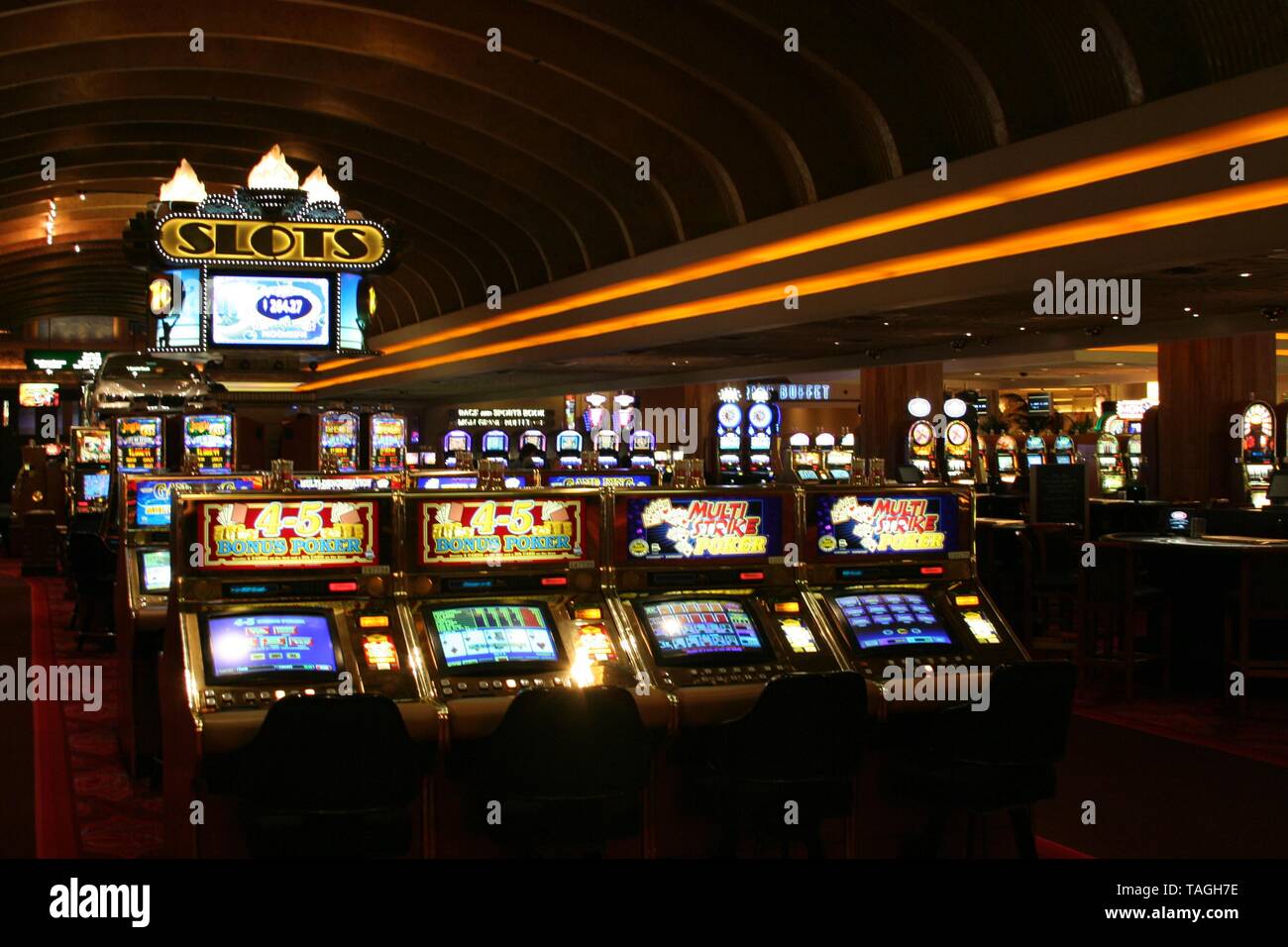
The primary benefit of this measure is increased GGY for casinos that take up additional gaming machines. Gambling operators must ensure that their supervision and monitoring of gaming machines enables them to meet the requirements of the Act and conditions of their licence. Data from the National Gambling Treatment Service shows that a relatively small proportion of patients report participating in gaming machines in casinos. Taken together, the three measures will determine the maximum number of gaming machines that casinos will be entitled to. The sector views an increase to this ratio as essential in order to ensure these casinos’ long term viability by allowing them to site more gaming machines, and this conclusion was reflected in the white paper. It has also meant that none of these casinos are able in practice to satisfy the current conditions which would allow them to offer the maximum number of gaming machines due to the amount of space they take up.
However, between 2005 and 2021, just 112 studies with a focus that included gambling were funded by UK Research Councils or the National Institute for Health Research (NIHR) compared with 691 for alcohol. The scope of the issues covered by the Economic and Social Research Council (ESRC) and the Medical Research Council (MRC) are most relevant to gambling as a topic. As with all fields of research, qualified researchers from universities and other organisations such as businesses and charities can apply directly to UKRI to fund research on gambling.
Encouraging further industry innovation within the current framework is unlikely to achieve meaningful progress due to limitations with meeting wider consumer preferences. Consumer preferences therefore indicate that cashless would need to complement, rather than replace, cash as a gambling payment method. 45% of respondents non gamstop sites would not be happy at all to pay for gambling via cashless payment methods. 77% felt that cashless makes it easier to spend more on gambling than intended, and 66% said that using cashless payment methods made it feel like they are spending less money than they actually are.
These initial checks use publicly available data and do not require sensitive personal information such as postcodes or employment details. Additionally, a mandatory minimum 2.5-second interval between spins is required to slow down gameplay and promote safer gambling. To promote responsible gambling in the UK, it is essential to understand the laws governing these games. The firm also plays a role in observing and influencing the regulatory environment and crafting innovative structures for commercial relationships within the industry.
You should consider whether you understand how spread bets and CFDs work, and whether you can afford to take the high risk of losing your money. Spread bets and CFDs are complex instruments and come with a high risk of losing money rapidly due to leverage. Some respondents pointed out how this voluntary albeit multifaceted arrangement varies from the finance sector, where the FCA publishes guidance on how financial promotions must present information about risk (an example is in Box 10 below). However, the limitations of such tools are documented in research, and further research is needed to understand the risk of unintended consequences such as distorting player perceptions of risk (explored further in the previous chapter’s section on safer products).
Annex E: Organisations and published authors that responded to the call for evidence
Every casino below is real-money tested, UKGC-verified, and rated across 7 criteria. A further casino guidance update to reflect the upcoming changes under The Money Laundering Regulations 2017 (opens in new tab) will be published in due course. Yes, but new rules as of January 2026 ban “mixed incentives.” This means a casino cannot require you to bet on sports to get slot spins.

While the risks vary by product and other factors, gambling participation is generally not in itself harmful and may even be positive. A YouGov survey commissioned by GambleAware estimated that 6% of the population are negatively affected by someone else’s gambling (for example through relationship strain or financial hardship) and that women are overrepresented in this category. However, a small proportion do suffer significant harm as a result of gambling, and the PHE evidence review included a detailed quantitative analysis on this issue. It is clear that gambling-related harms can ruin lives, wreck families, and damage communities, with issues including mental health and relationship problems, debts that cannot be repaid, crime, or even suicide in extreme cases. However, Public Health England (PHE) compiled, assessed and reviewed evidence on gambling participation and harm as part of the Gambling-related harms evidence review which was initially published in September 2021, then revised in January 2023 by the Office for Health Improvement and Disparities.
If a site looks “UK-friendly” but dodges licensing, it’s also dodging the obligations that come with it. A lot of today’s changes trace back to the Gambling Act review and the wider reform programme aimed at modernising rules for a digital gambling market. Eventually, these laws were repealed and the country embraced legal gambling. Poorer citizens conducted street gambling, and while this was illegal, enforcement was difficult to administer. However, on-course betting was permitted at horse tracks, but only the upper class could partake. Parliament issued the Gaming Act of 1845 and Betting Act of 1853, both of which effectively ceased all commercial gambling.
With regard to casinos that currently operate with a gambling area of 1500sqm or more, these casinos will be permitted to remain open with their current gambling area. When asked about the reduction in minimum table gaming area in Small 2005 Act casinos from 500sqm to 250sqm, more respondents were in favour of this being applied than opposed. A fairly even number of respondents were for and against the 12.5% rule applying for 1968 Act casinos, whereby any table gaming area would only count towards the minimum table gaming area if it constitutes 12.5% or more of the total table gaming area in the venue. Any 1968 Act casinos that wish to remain on the existing regime will be able to do so and are not required to adjust their product offering (unless they decide to take up the opportunity to offer facilities for betting). Feedback from engagement with operators has indicated that the sliding scale as proposed would benefit the majority of casinos, with over 80% of casinos estimated to benefit depending on how floor space is reconfigured.
It has also argued that as bingo games are required to have a participation fee which creates a retention pot for future winners, operators are constrained in offering further choice of side bets within their session. While the pay-out per game can be variable, the participation fees create a pot in retained prize fees should multiple customers win. These additional games are compliant with current rules of bingo in that they require participation in the main game of bingo and the numbers are allocated to the customers. Licensed bingo operators already offer in-game bonus prize opportunities under current rules defining bingo. While there is an initial outlay, we believe this gives operators some flexibility on late night opening and falls within the discretion of local authorities, ensuring decisions are made at a local level.
Removing the test purchasing exemption on small business will result in additional minor costs for smaller gambling operators. Making ‘Think 25’ an ordinary code expectation for Gambling Commission licensees will introduce consistency across the sector, discourage children from trying to take part illegally in gambling activities and reduce potential harm that might be caused by early exposure to age-restricted gambling products. We will continue to monitor industry’s progress on this issue and will legislate to make provisions within the Gambling Commission’s code of practice for alcohol licensed premises binding when Parliamentary time allows. Pre-2020 test purchasing pass rates were also very low for gambling in alcohol licensed premises (Figure 19).
This would potentially generate an additional £1,560,000 in total annual funding for local authorities and increase average annual costs per premises by £167. This would potentially generate an additional £780,000 in total annual funding for local authorities and increase average annual costs per premises by £84. The higher end takes into consideration that some local authorities may need additional funding to carry out the full extent of administration of their gambling duties and gambling enforcement, such as the development of policy statements.
This mainly extended to random number-generated casino games, but a few submissions argued that betting should also be included. However, a case has been made that the unlimited stakes on online slots play are particularly problematic due to the nature of slots play and its increasing popularity as seen in the monthly operator data collected by the Gambling Commission since the start of the COVID-19 pandemic. In addition to the structural characteristics discussed above, stake size can be a key determinant of losses and gambling-related harm. However, the new rules will strive to make games intrinsically safer across the sector, while leaving space for operators to continue innovating and developing games which customers want to play. Longer-term, Gambling Commission changes to the prevalence and participation methodology will provide a more detailed assessment of problem gambling trends across the online slot player cohort to support evaluation.
Cryptocurrencies facilitate faster transactions, appealing to tech-savvy customers and ensuring smoother payment processes. Blockchain technology and cryptocurrency add layers of transparency and security to the industry. Players seek convenient access, leading to the proliferation of apps and platforms offering seamless gaming experiences. Introducing stricter regulations, including meticulous age and identity verification, complicates compliance. Staying informed about these changes is crucial for adapting to the industry’s future dynamics. The evolving landscape of casino regulation in the UK presents significant changes and challenges for entrepreneurs and businesses in the sector.
8.9% of respondents felt that their gambling had ‘at least some of the time’ caused financial problems for them or their household. This has led the regulator and many others to conclude that more prescriptive requirements are needed to strengthen protections for customers and set clear expectations for companies. Nonetheless, this is a potentially concerning pattern in a sector with a known addiction risk, and where a key manifestation of that addiction is high spending. The range of estimates submitted to our call for evidence suggest that (ignoring accounts which net win), around a quarter of Gross Gambling Yield is derived from 1% of accounts, approximately 60% comes from the highest spending 5%, and around 75% from the top 10%, although this varies by product. This distribution means that operator revenue is predominantly derived from a relatively small cohort of high spending customers.
The minimum legal gambling age is 18 for every product except the National Lottery and equivalent society lottery draws, where the minimum is 16. The thresholds below are the headline LCCP triggers; individual operators may layer stricter internal rules on top. These are sometimes called “affordability checks” in the press but the Commission now uses the terms financial vulnerability and financial risk. The 2023 White Paper proposed maximum online slot stakes of £2 per spin for 18–24-year-olds and £5 per spin for players 25 and over.
In England, there are currently eight NHS specialist gambling clinics in operation, including a national children and young persons’ clinic (part of the National Problem Gambling Clinic in London), covering London and the North East, North West, Yorkshire, South of England and West Midlands. While treatment of gambling-related harms is not currently mainstreamed across the NHS, limited numbers of people may seek support through existing services such as Mental Health Services and Improving Access to Psychological Therapies (IAPT). Others pointed to difficulty accessing operator data without being dependent on the goodwill of the industry. They said gambling research has attracted a narrow pool of researchers, in part because of reluctance to accept voluntary funding originating from industry donations and the consequent low status of gambling as a research area. Unlike for alcohol, substantial funding for gambling-specific research, as well as education and treatment, is available through the system of voluntary donations from industry outlined above.